OLE BERGMANN
LET'S RETHINK GEMSTONE JEWELRY!
A VISION FOR JEWELS
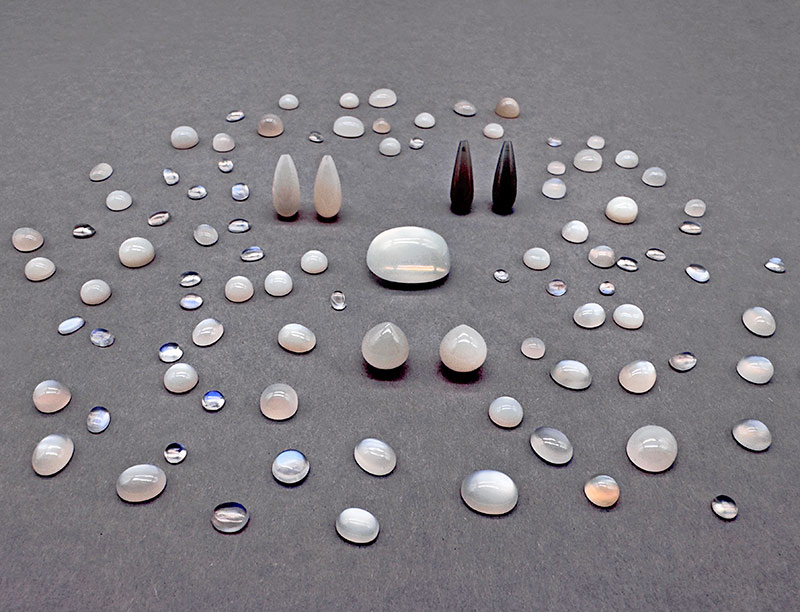 Moonstones, cut as cabochons and briolettes. Photo: Shinyoung Rhyu.
Gemologist, precious stones trader, and former goldsmith Ole Bergman of Berlin talks to SMCK Magazine about his experience and vision – and his decision to award a prize that could transform the jeweler's priorities and designs.
Interview by Christoph Ziegler
I studied in Hanau and worked as a goldsmith for 28 years. During holiday breaks, I worked for a friend as a gem trader. Ten years ago, I was sitting in my workshop with my feet on the table, sipping coffee, smoking all day long, playing Candy Crush for 14 days in a row. It was then that I realized that goldsmithing was over for me. I have always liked stones: I know the practice and the prices. So I said to myself, "go to Asia, take money with you, take a risk!"
I buy stones from all over the world. Today the stones are processed at a small number of hotspots. There are many stone grinders in India, where you can go to a large company with 150 people sitting side by side, grinding stones mechanically. We look for small, family enterprises with two or three brothers really working there. Collaborating with such people is what we specialize in. We also buy unprocessed stones.
 Various stone cuts. Photo: S. Rhyu.
We offer all sorts of services. My clients include the small jewelry-maker, the highly creative jewelry designer, the internationally acclaimed artist.
When I hear of ethical precious stones, I think there are not many fields like ours where people lie so much. One can only try to purchase the stones at the mine. One should collaborate at least with small family enterprises where one knows that ethical standards are maintained when it comes to finishing.
"One doesn’t see any jewelry in Berlin."
The crazy 1980s that sealed Berlin’s image are gone for ever. The Prussian touch is still there; it is ok to have a tree-lined avenue but these must be apple trees to be useful. This is my notion of Prussia. It is not about the joy of life manifest in Bavaria.
Maybe this has to do with Protestantism and the lack of possibility for confessing one's sins. On the other hand, we have 400 goldsmiths in Berlin and another 400 jewelry-makers and artists who work with jewelry. Something attracts them to Berlin, even though it is not a good market for jewelry.
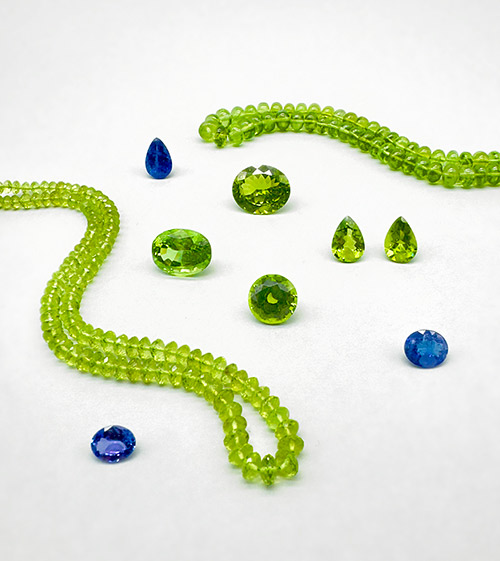
Peridots and Tanzanites. Photo: S. Rhyu.
There is also a lot of traditional craftmanship – the classical goldsmith with the small shop still exists there. We also have a strong jewelry-loving Russian community in Berlin, as well many creatives who promote their work through social media. The work of Berlin's jewelers may look modern or conservative or better or worse, but their number is amazing. However, one doesn’t see any jewelry in Berlin.
There is a counter-example though: on a Saturday, just walk around Düsseldorf and Cologne and you will see jewelry everywhere. But the question is, is this the sort of jewelry you like?
Together with Götze, a local company trading precious metals, we founded the Goldschmiede Quartier Berlin two years ago. It’s a shop-in-shop for our products and services. You can buy your metal sheets, your chains, your wires at Götze and then come over to us to buy stones.
The Gemma Prize: "I am simply curious to see contemporary designs submitted for this award."
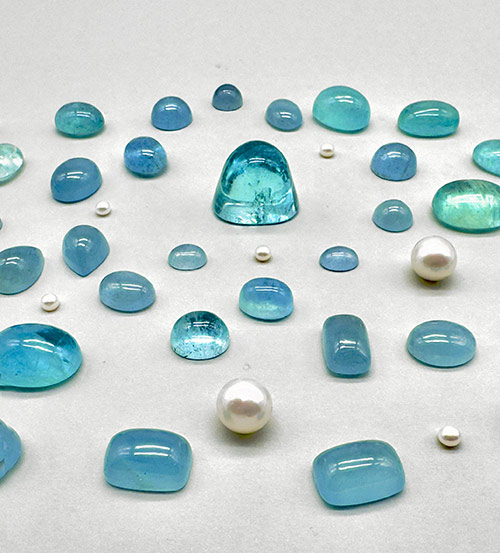
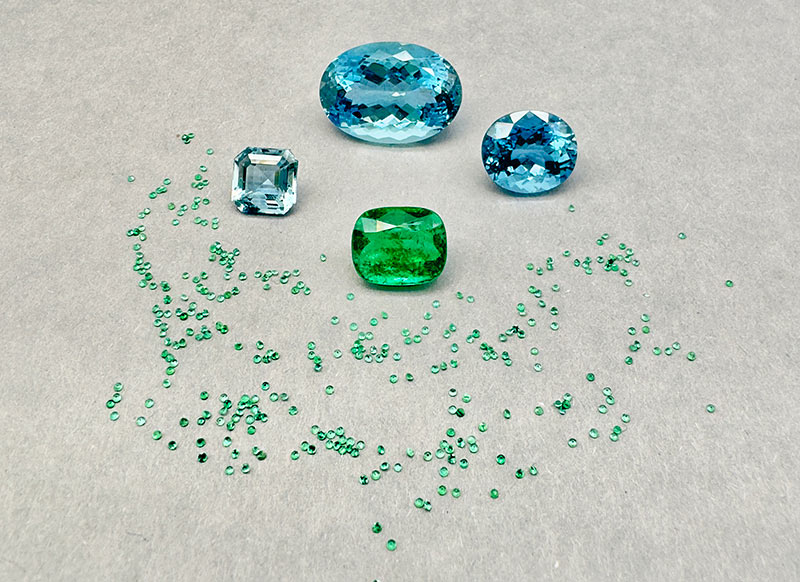
Aquamarines and South Sea Pearls. Photo: S. Rhyu.
My art historian wife and I are members of the Grassi Museum Friends Association. The concept of the prize is about rethinking jewelry with precious stones or that the precious stone should have a central role in the jewelry piece.
We emailed our customers – approximately 1,000 contacts – and informed them of the Open Call. I am simply curious to see contemporary designs submitted for this award. Of course, I had informed the Grassi Museum of my perspective and set the framework of what this award should be about. I see a gap between commerce and art.
Born in the 1940s, I find author jewelry both good and not good. We have completely new techniques now. What kind of a form language could those techniques create?
My advice for designers is that they should think of creating contemporary jewelry with stones. However, I do not have a set idea of how the awarded jewelry should look like. To me it isn’t important if the recipient is a goldsmith or visual artist or a carpenter or a builder.
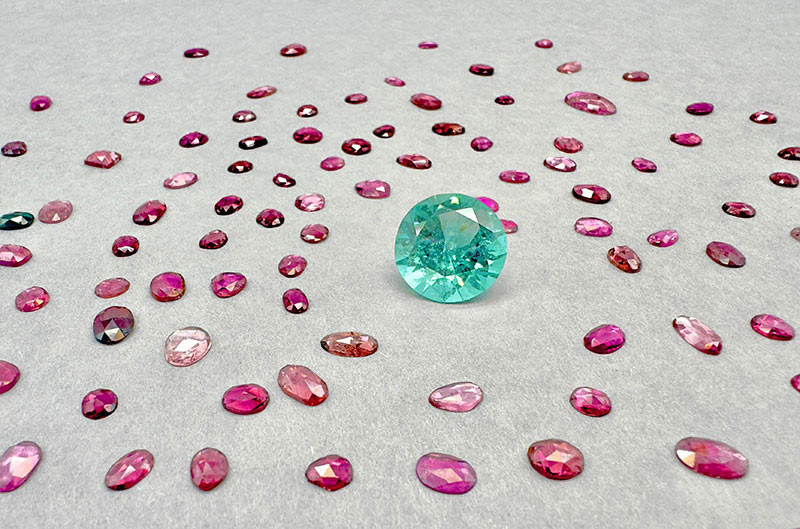 Tourmalines, cut in rose and faceted styles. Photo: S. Rhyu.
LINKS:
www.olebergmann.de |
instagram: @olebergman