ADORN PORTRAIT PROJECT
THE IDENTITIES WE WEAR
CLOTHING AND ACCESSORIES EMBODY OUR LIVED EXPERIENCES AND COMMUNICATE HOW WE SEE OURSELVES INDIVIDUALLY AND COLLECTIVELY.
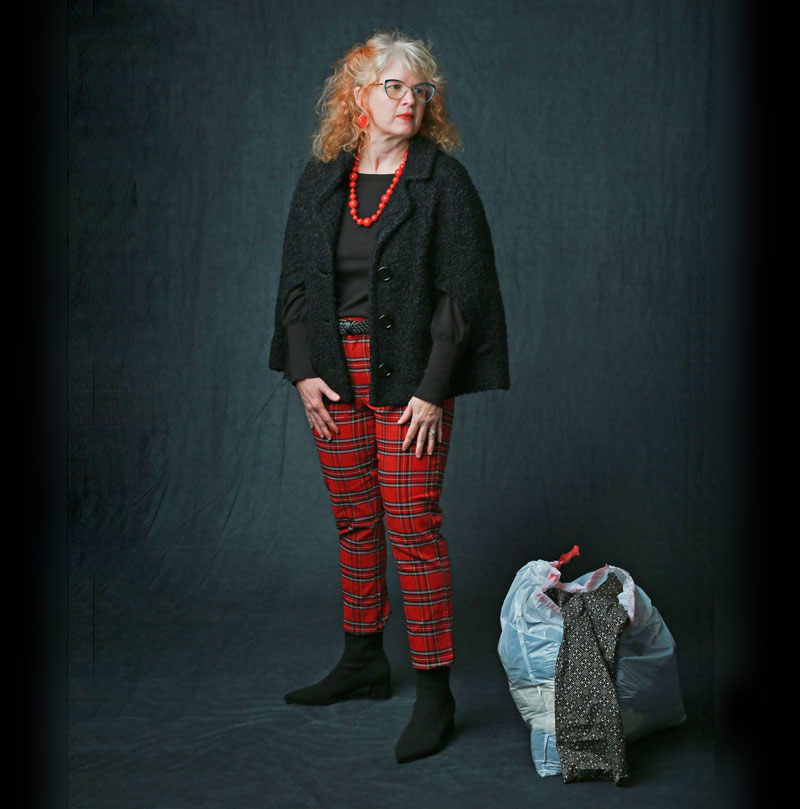 ADORN project: Kathryn. Photo by Kathryn Mayo.
ADORN is a collaboration project by anthropology professor Anastasia Panagakos and photography professor Kathryn Mayo with assistance by Janna Eerkens, a college student and teaching assistant in the Photography Department at Cosumnes River College in Sacramento, California.
We started the ADORN Portrait Project to invite conversation on how humans give meaning to the ways we dress and accessorize the body.
How does clothing make us feel vulnerable in one situation and powerful in another? How does clothing render us invisible in some instances and draw attention in others? When does clothing become an act of resistance and when do we wear clothing to conform?
Blending portraiture and storytelling, ADORN amplifies individual and unique voices, and unravels how memory, cultural legacy, and tradition guide our personal expression.
Anastasia and Janna
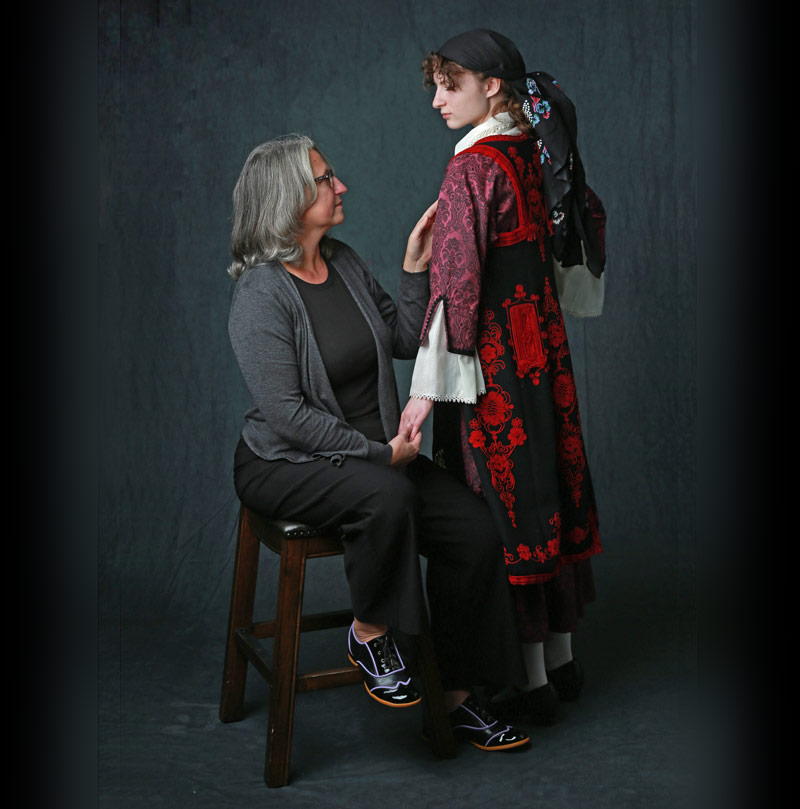 ADORN project: Anastasia and Janna. Photo by Kathryn Mayo.
My name is Anastasia and I am posing with my daughter, Janna, who is wearing a reproduction of a traditional dress worn in the 46 villages of the Zagori region of northwestern Greece. This special ensemble was hand sewn for me by my Greek immigrant mother thirty years ago when I belonged to a dance group based in Stockton and participated in Greek folk dance competitions.
The dress is a rich purple brocade with a regal feather and leaf motif worn beneath a sigouni or flokata - a long, sleeveless black woolen coat edged in red trim and cordage, ornately embroidered with two rows of coins sewn on either side of the opening. The black satin apron with a rose and daisy motif was also hand embroidered by my mother and is cinched at the waist by a large and intricate metal belt buckle. Common to many regions of Greece, the hair is covered by a madili or headscarf.
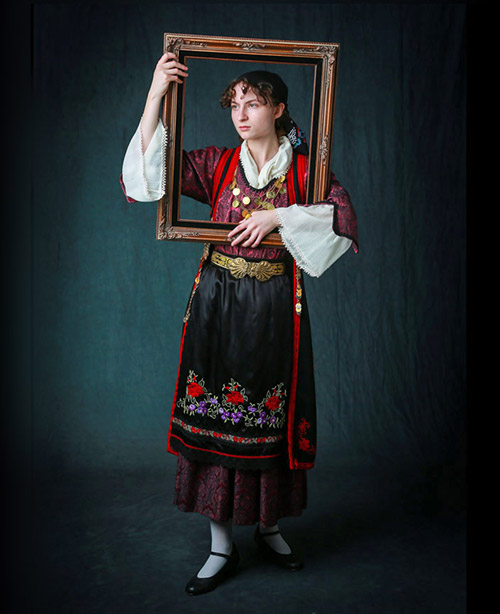
ADORN project: Janna. Photo by Kathryn Mayo.
This ensemble is a reproduction of traditional dress that would have been worn over one hundred years ago, and so it is not what some would call “authentic” in terms of its vintage, origin or materials. Nor is it worn every day as part of someone’s lived experience, instead, it was created specifically for dance performances. It is a good representation, however, so much so that it won a best costume award when presented at a Greek folk dance competition.
For me, what makes this outfit most special is that I can remember watching my mom sew and embroider, her hands moving deftly over the fabric, her dedication and long hours in the striking red pattern of the coat. As a performer, I wore this costume with great pride and it gives me joy to see my daughter don this family heirloom and remember our Greek roots.
Jeannine
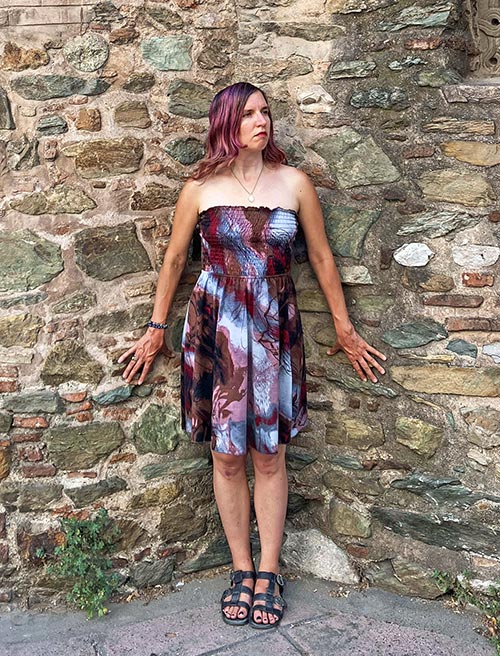
ADORN project: Jeannine. Photo by Anastasia Panagakos.
My strapless sundress was purchased from a Clinton, Iowa thrift store by a man with whom I had a complicated relationship.
The man who gave me this dress verbally and emotionally abused me. On his good days he was thoughtful, generous, humorous, and passionate. He had an artist’s eye and knew my tastes. But the gifts had strings attached. “Don’t wear that in front of your male friends,” he said. Fights ensued when I refused to comply.
I ended the relationship. In October 2024, we were about to have our first conversation in over a year when I got terrible news: he’d been hit by a semi-truck and killed.
I shouldered the gut-wrenching grief largely alone. “How can you feel so sad about someone who mistreated you?” my friends asked. The answer is complicated, as was the grief.
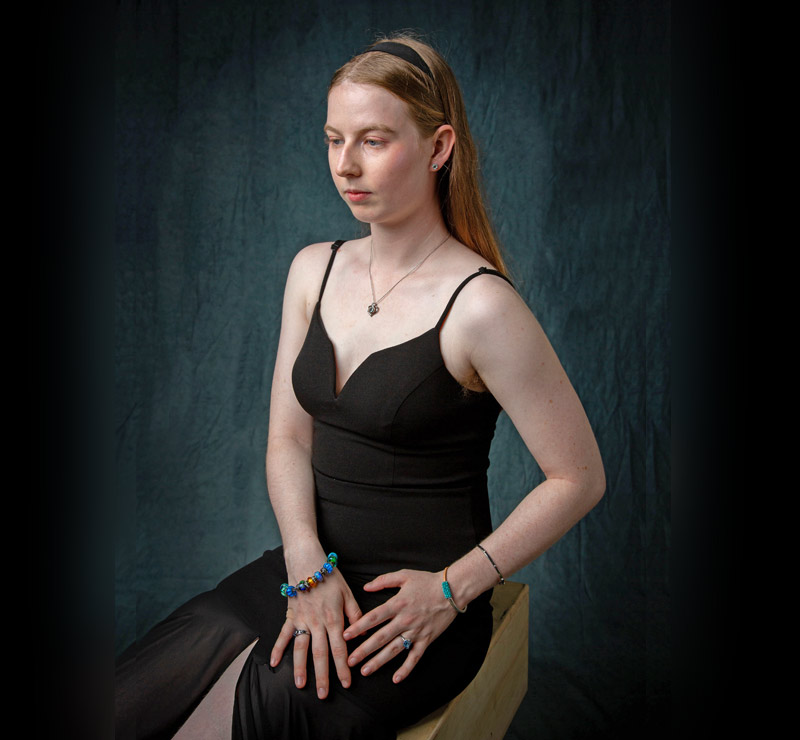 ADORN project: Audrey. Photo by Kathryn Mayo.
LINKS:
www.crc.losrios.edu/adorn
|
instagram: @adornphotoproject